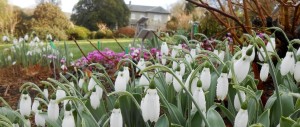
The Garden House at Buckland Monachorum, Yelverton. PL20 7LQ will be open every weekend in February to enjoy the wonderful snowdrop collection, and the Tea Room will be serving a winter warmer menu.
 The Garden House is the elegant former home of the vicars of Buckland Monachorum. Built in the early 19th century, the house accommodates the tearooms and offices.
The history of this 10-acre garden is closely entwined with that of Buckland Abbey and the local church. In 1305 the Bishop instructed the Abbot to build a house for the parish priest and this site was chosen. At the dissolution of the monasteries, the Abbot became the vicar of Buckland Monachorum and by the early 1700s, the vicarage consisted of a substantial 3-storey dwelling. The remains of this building, a tower with spiral staircase and a thatched barn, formerly the kitchen, are now the romantic ruins on the lower terrace in the walled garden.
A modern vicarage was built in the 1920s and The Garden House was sold as a private dwelling. The house came onto the market again just after the Second World War and was purchased by Lionel Fortescue, a retiring master at Eton, and his wife Katharine.
Lionel was the son of a Newlyn school painter and had a good eye for colour as well as being an exacting plantsman. Lionel and Katharine set about renovating and developing their garden whilst running a thriving market garden business, providing stock plants for growers in the Tamar Valley, and managing a herd of Jersey dairy cattle. Over the next 40 years the Fortescues created a garden which was – and continues to be – viewed as one of the finest in Britain.
By 1961 they had established the Fortescue Garden Trust, an independent registered charity, to which they bequeathed the house and garden to ensure the survival of this beautiful place for future generations. After their deaths in the 1980s ownership passed to the charity, which maintains the Fortescues’ lovely legacy.
You could stay nearby at: www.easthook-holiday-cottages.co.uk
 Christmas Days for farming families are full of traditions and are normally spent on the farm – animals still need to be fed and watered, even on Christmas day. Here at Harton one of our favourite treats is roasting home grown chestnuts on the fire. Nearly 40 years ago we planted some chestnut trees up our lane and, every so often, we get a crop with nuts that are actually big enough to roast!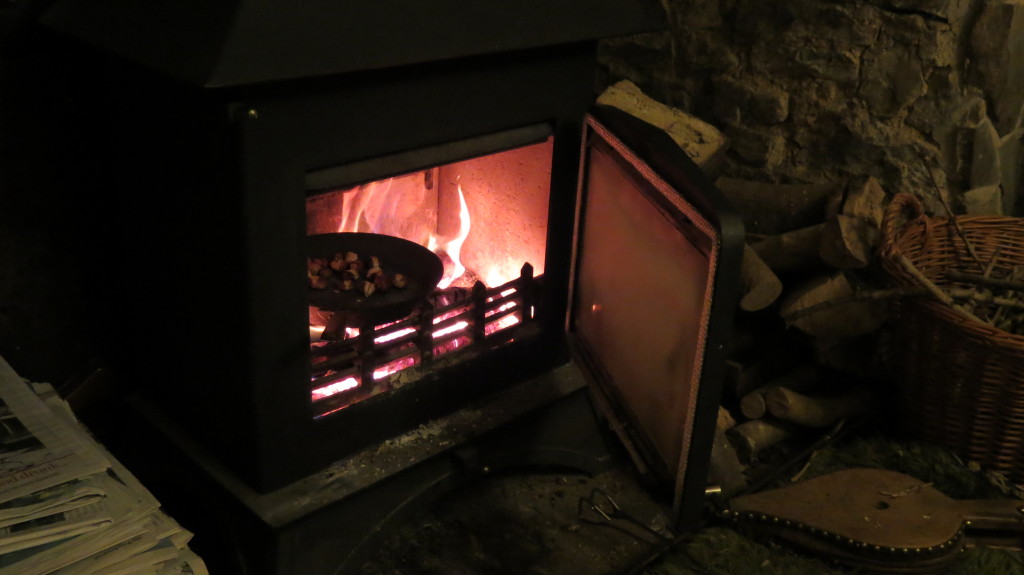
 This period on Christmas morning is fraught with challenges. The Christmas tree has to be defended against Bruce and Barley using it for the wrong purposes. Chocolates, glasses and various other things have to be moved to safety, as the Clumbers challenge Teazle to a circuit round the sitting room without touching the floor. She normally wins as the Clumbers are a bit more earth-bound. Then there is the spaniel instinct to smell out, and flush, birds. All three go beating at various shoots so finding and retrieving a dead pheasant is second nature. However, picking up our turkey was not on the agenda and we only just stopped Barley doing just that, as shown in the photo. Probably the biggest pheasant he had ever seen!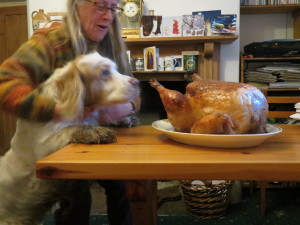
 Wildlife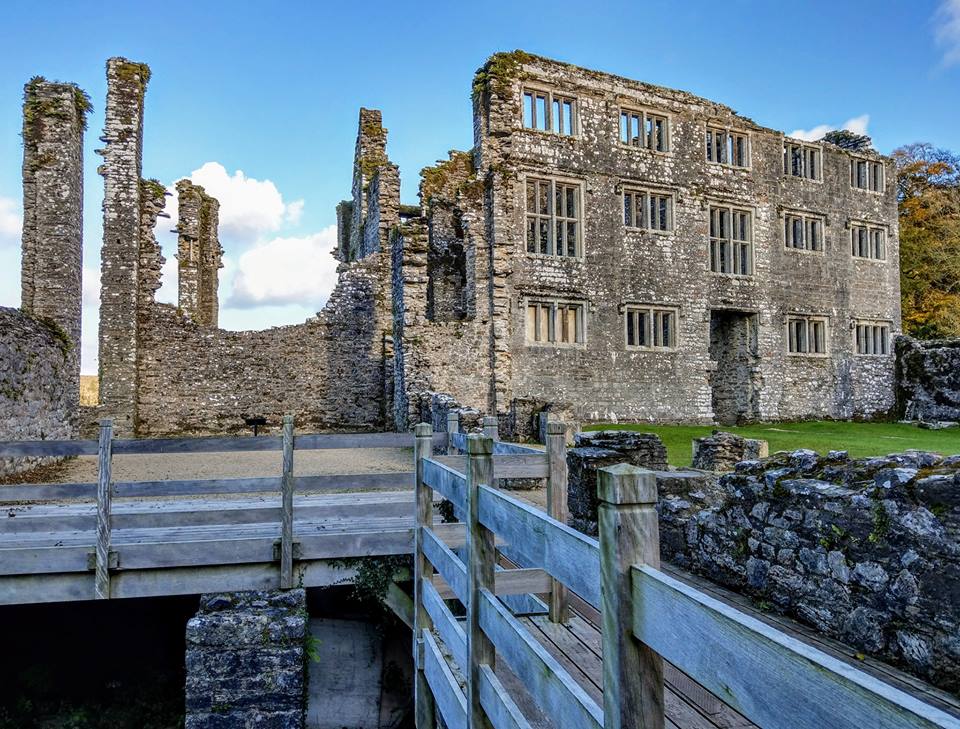
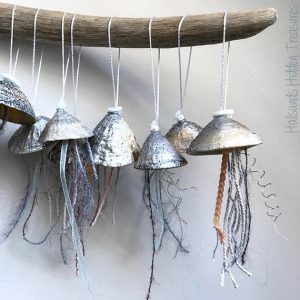 Another local artist we have been following on social media for a while is Hallsands Hidden Treasures. She makes beautiful decorations for the home using scavenged drift wood and natural materials from the beach, as well as plastics which have washed up, which she sells on Etsy. Her decorations really add something uniquely Devon to the Christmas tree – we especially love her hanging jellyfish made from limpet shells!
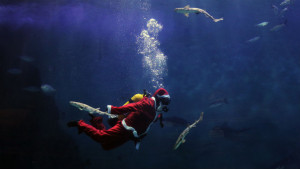
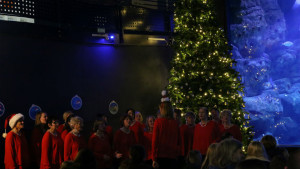 If you‘ve been inspired by the amazing footage of weird and wonderful sea creatures on the BBC’s Blue Planet II, why not combine it with a bit of Christmas magic and visit the Plymouth Marine Aquarium? For one night a year the National Marine Aquarium transforms into a winter wonderland! They have mince pies and mulled wine, a Christmas choir singing festive songs, Christmas cupcake decorating and a special dive from Santa himself with a present for every child.