If you go down to the (Woolacombe) dunes today,
You’re sure of a big surprise.
If you go down to the (Woolacombe) dunes today
You’d better go in disguise…….
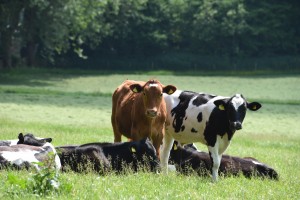
You might just bump into a rather handsome North Devon Red cow! The National Trust are running a conservation project in partnership with a local farmer which aims to enhance habitat management for the diverse species of wildlife in the area.
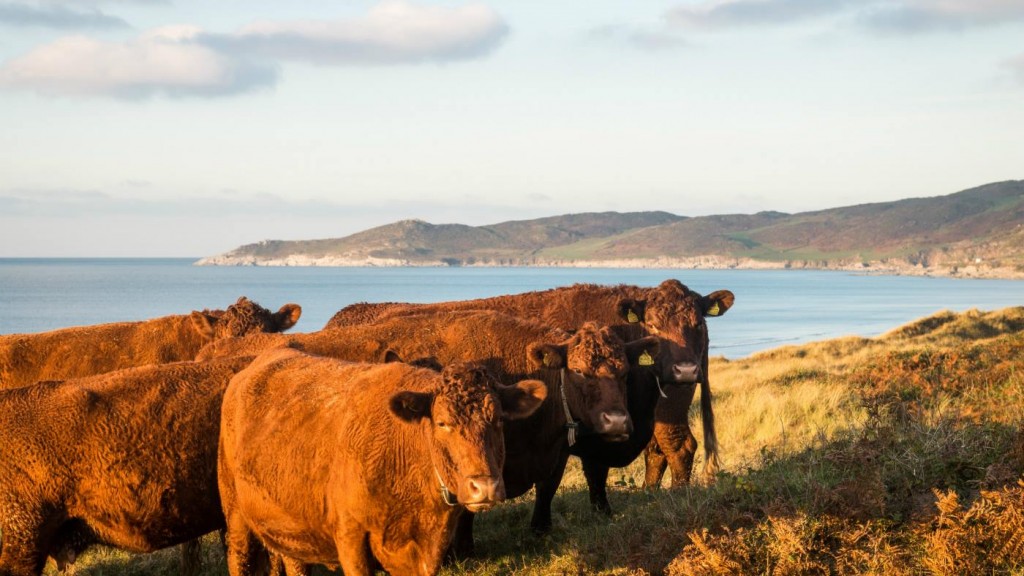
(c) The National Trust
The project using North Devon Red cows to graze the sand dunes at Woolacombe was driven by the aim to provide a space for nature, a space for wild flowers and fine grasses that support pollinators, invertebrates, reptiles, amphibians and birds. This is part of the Trust’s aim to manage their own land for the benefit of nature and restore the health of the countryside to bring back the dwindling wildlife. Historically the sand dunes had been managed by man, using mechanical techniques (ie mowers) to manage scrub and improve the habitat.
With no ecosystem engineers (like the North Devon Red ladies!) capable of breaking up the dense bramble at the Warren, and it being isolated from other healthy habitats to support it, it looked unlikely that the habitat would build itself into anything rich and diverse. However, the Trust wanted a habitat that benefits both wildlife and human well-being. The Aquatic Training Centre at Woolacombe, where tens of thousands of US troops trained in preparation for D-Day, was probably the greatest influence on the current state of the habitat.
Obviously, erecting miles of fencing to separate the dunes from the beach would have been extremely costly, unsightly and prohibitive to the enjoyment of the dunes by the general public. However, a new technology, invisible fencing, allowed the Trust to look at how they could use cows to break up the scrub in a manner which would help improve conditions for the species that need a helping hand. The North Devon Red cows graze the scrub erratically, creating a range of height and variety in the plant life, in a more gentle way than mowing. This helps to generate a rich and sustainable environment with a variety of habitats for wildlife, as well as opening up more space for the plant life which the Trust wants to encourage.
The dunes of Woolacombe Warren create a beautiful landscape and a stimulating and inspiring place to visit, so this seemed the perfect environment to trial invisible fencing. The herd of North Devon Red cows grazing the dunes have been fitted with collars that respond to a radio signal emitted by a cable buried around the dunes. When approaching the cable an alarm sounds on the collar and the clever cows have been trained to know that if they continue in the same direction they will receive a pulse from the collar to deter them from continuing any further. The cows really got the hang of this and rarely tested the boundaries beyond the alarm bell. Looking after the cattle and ensuring their wellbeing was a top priority, so veterinary observation was carried out throughout the trial of this innovative fencing and there continues to be no cause for concern.
The cows grazing Woolacombe Warren achieved more than anyone could have hoped for during this modest trial on 6 hectares of the warren, so everyone is excited to see what comes to the light this spring. Only grazed there for the winter, the cattle will be taken off the dunes by the end of March. It has been great for the cows, avoiding being kept indoors all winter and being able to reside in a dry environment with the fresh low rougher forage that North Devon Red cattle are known to thrive on. It really has been a win for both farming and nature!
For more information on the work carried out by The National Trust, go to: https://www.nationaltrust.org.uk/site-search.html?q=wildlife+conservation+projects
If you wanted to see the project in action, it was featured on the BBC Countryfile programme on 5 March 2017, now available to watch on the BBC iplayer if you missed it.
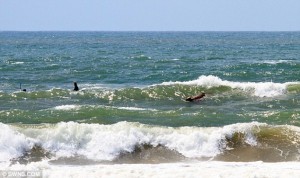
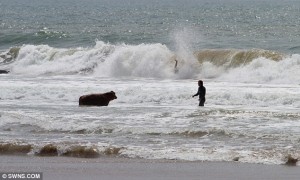
As the invisible fencing works so well spectacles, such as when a cow decided to join surfers at Croyde beach last year, will probably be avoided!
Photos (c) SWNS.COM
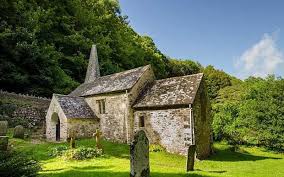 With its range of interesting independent shops and quality restaurants and pubs, the traditional village of Porlock is also enchanting. Porlock Weir, 2 miles away, is a quaint little harbour with a unique charm; from here take a stunning walk through coastal woodland to the tiny hamlet of Culbone where you’ll find England’s smallest complete church. It can only be reached on foot along the Coast Path. There are spectacular views across the Bristol Channel on a clear day and the route passes the romantic remnants of Lord Byron’s daughter’s gothic mansion, with tunnels carved out of the hillside by nineteenth-century Swiss mountaineers. It really is a beautiful area to explore.
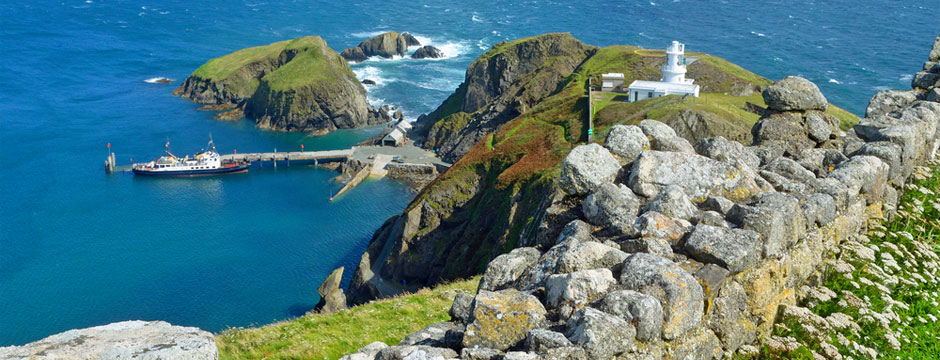 Wild and dramatic on the western side, sheltered and gentle on the eastern, the entire island and the waters all around it are a haven for an incredible variety of wild flora and fauna. Watch for dolphins, different varieties of seals breeding in Lundy’s sea caves, basking sharks and puffins. The name ‘Lundy’ means ‘Puffin’ in Norse, but the real success story for sea birds is the Manx Shearwater whose numbers were dwindling. They are ground nesting birds and rats were eating their eggs and chicks. So, in 2002 a campaign was started to reduce the rat population. It worked and there are now 1000s of shearwaters nesting on Lundy.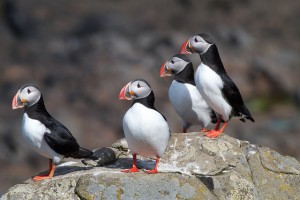
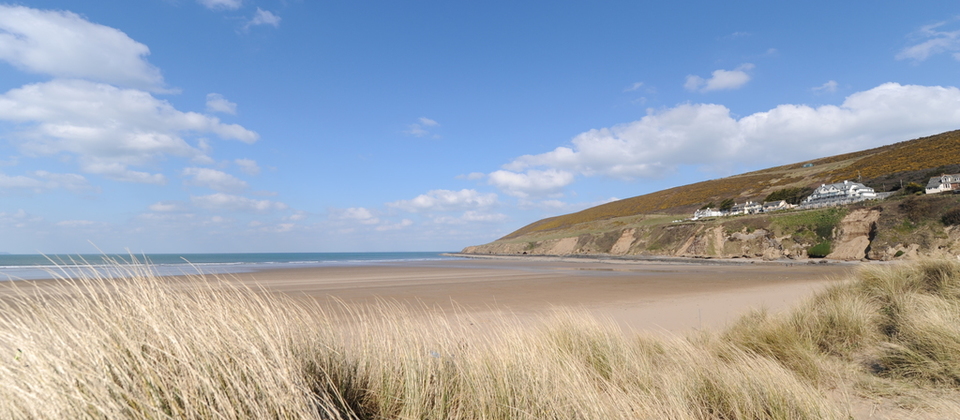 Saunton is dog friendly throughout the year too, so a great destination for dog walking where they can run free. There is also a dog free area for those who prefer not to have our four legged friends flying across their picnic rug!
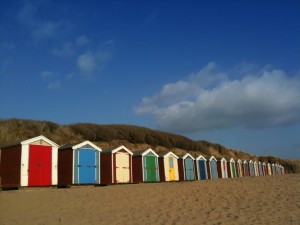 Why not hire a traditional seaside beach hut for the day or a few days? It’s a great base for all your gear and if the weather isn’t so good then you’ve a bolt hole to slip into and sip tea (or a glass of wine!).
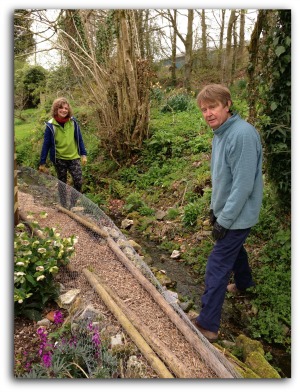 Our blog photo shows Jim and wonderful Workawayer, Elle building a duckling run last May. The ducklings and Mother Duck lasted in that run less than one day before they found a way out and ran from there to the ponds – just one day old! Three surviving ducks (three quarters wild mallard and just one quarter runner duck) are now fully grown and live wild on the ponds.
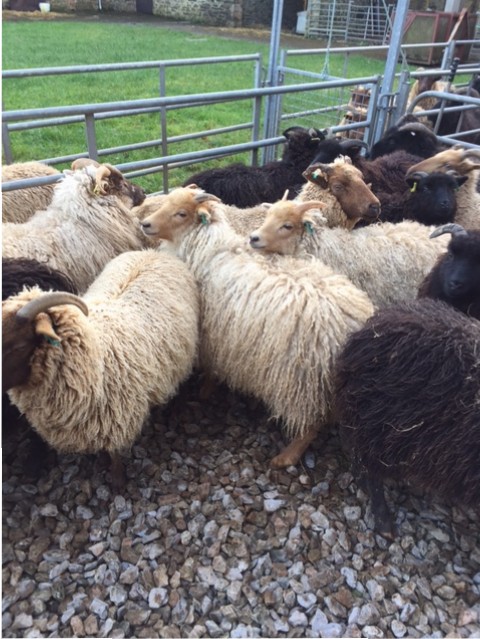
 We are a traditional, mixed family farm which is run by three generations of the Maynard family, so everyone gradually became involved.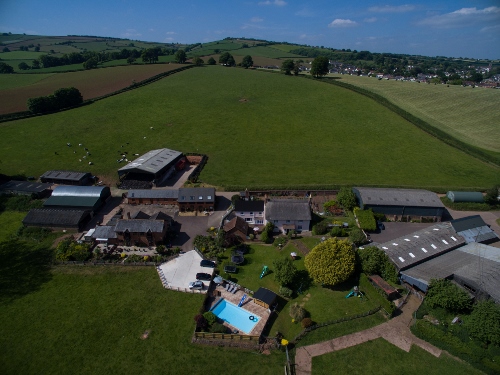
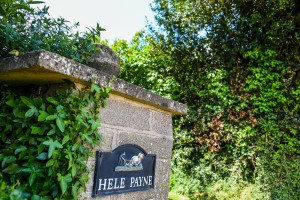
 Well, finally it is completed and we are delighted with the finished result. We truly feel it expresses how proud we are of our corner of Devon and we love sharing it with the guests who decide to come and stay in our holiday cottage.
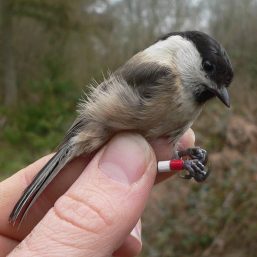 The habitat here at Little Comfort has been identified as a possible breeding site. As they are not easy birds to identify accurately it will be done with sound recordings, as well as visually, as their call is very distinctive. Roger and I think that we have identified them in the valley and on the bird table, but as identification is so difficult we are reluctant to say so with certainty. It would be so good if all the hard work that Roger has carried out on the farm to enhance the wildlife habitat has provided a safe haven for these dear little birds.